Radar level measurement explained
Technology, benefits, and the IIoT

In Kürze
- Level measurement can present significant challenges: Selecting an inappropriate device or incorrect configuration can lead to operational inefficiencies and costly disruptions.
- Choosing the right technology and implementing it properly ensures a stable process that operates seamlessly in the background.
- Radar technology offers substantial advantages and has progressively replaced alternative measurement methods across most applications.
- Its widespread adoption has been driven by improved affordability and its ability to deliver highly accurate level measurements.
- This article explores the principles behind radar technology and examines how IIoT-enabled radar devices have become a pivotal innovation in level monitoring for modern industrial environments.


How to measure levels in tanks?
The market offers a wide range of models that use different methods for level measurement. Determining which option is best for your process depends on its specific characteristics and requirements.
So, which type of sensor should you choose—pressure, hydrostatic, capacitive, ultrasonic, or another? Each has its place, but radar technology stands out for its versatility across numerous applications. When combined with IIoT capabilities, it significantly simplifies monitoring and control.

How does a radar work?
Radar level transmitters typically operate using one of two principles: time-of-flight (ToF) or frequency-modulated continuous wave (FMCW). The following section explains each in detail.
Time-of-flight
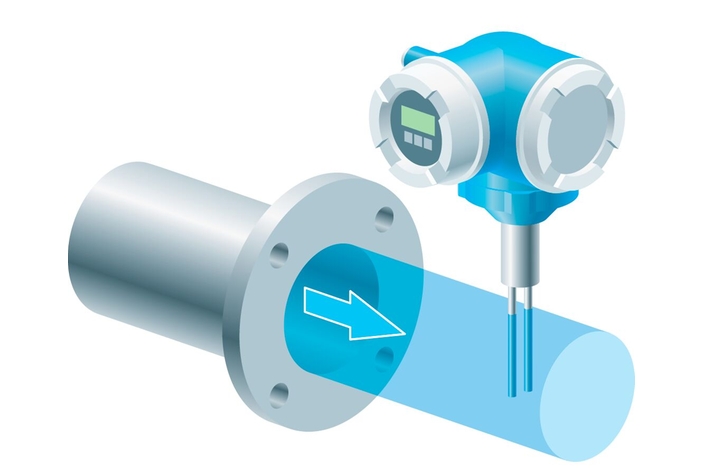
With this method, the radar device determines the distance to the product surface by emitting radar pulses that reflect off the surface and return to the device. The antenna receives the reflected signal and transfers it to the electronics, where the microprocessor analyzes the echo and calculates the time taken for the signal to return.

The distance (D) to the surface is proportional to the time of flight (t) of the pulse from the radar. Here is the formula the microprocessor uses:
D = c · t/2
Here, c represents the speed of light.
After the device finds the distance (D), it can calculate the level (L) based on the empty distance (E):
L = E-D
Frequency-modulated continuous wave (FMCW)
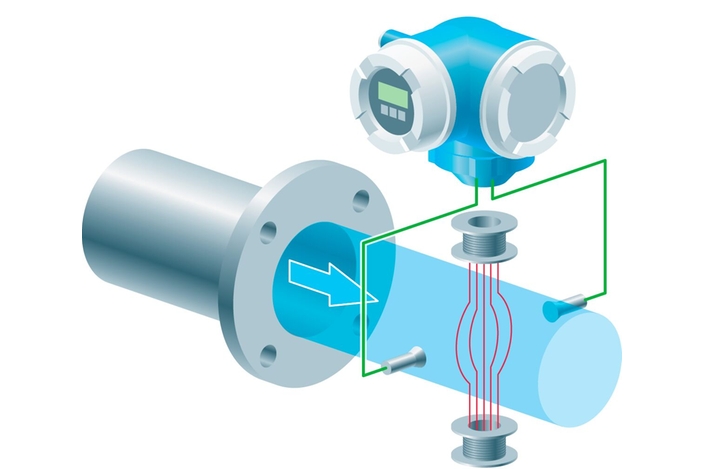
For this method, the radar sensor emits a high-frequency signal. This frequency increases over time and it creates what we call a frequency sweep or signal sweep. This signal will reflect from the product surface to be received by the antenna and transmitted to the electronics with a time delay (t).
The frequency received differs from the frequency emitted, and the difference (Δf) is proportional to the echo curve. It applies the Fourier transform into a spectrum, as shown here:

Frequency-modulated continuous wave (FMCW)
The device determines the level by calculating the difference between the tank height and the measured distance. While this method is more complex than the ToF approach, all calculations are handled internally by the device, ensuring accurate results without additional effort.
Frequency band
It is important to understand frequency bands or consult an expert to determine which option best suits your application. Non-contact level sensors are available in four different bands, with most operating at 6 GHz, 10 GHz, or 26 GHz.
Recently, radar sensors with 80 GHz capability have entered the market. These offer significant advantages for process installations, particularly in applications where traditional radar transmitters require more space for the beam angle.
Which frequency band is best for your process? The answer depends on several application-specific factors. You can either conduct detailed research or provide your process data to an expert for guidance - the former offers thoroughness, while the latter ensures speed.
IIoT level monitoring
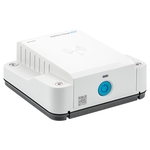
IIoT radar sensors represent the latest generation of compact level measurement devices. Models such as the Micropilot FWR30 from Endress+Hauser are designed for easy installation in small tanks and can be relocated as needed.
This portability is enabled by battery power and wireless communication, allowing tanks to be moved to any location with internet access while maintaining continuous data transmission.
Additional features include local tracking, configurable minimum and maximum thresholds, and automated alerts when measurements change. Operating at 80 GHz, these sensors are ideal for small containers, providing reliable and accurate measurements even in space-constrained applications.

Cloud-based IIoT radar devices, such as the Micropilot FWR30, can be configured in just a few simple steps. Once set up, all measurement data is accessible from a smartphone, laptop, or tablet. Complementary services, like the ones provided by the Netilion IIoT ecosystem, provide advanced features, including dashboards, historical data, mapping, notifications, and more.